
Labs
Room No: 05
Area: 94.2 sq. m.
Capacity: 25
Incharge: Dr. Pravin N. Khatale
Assistant: Bhushan Suresh Gawai
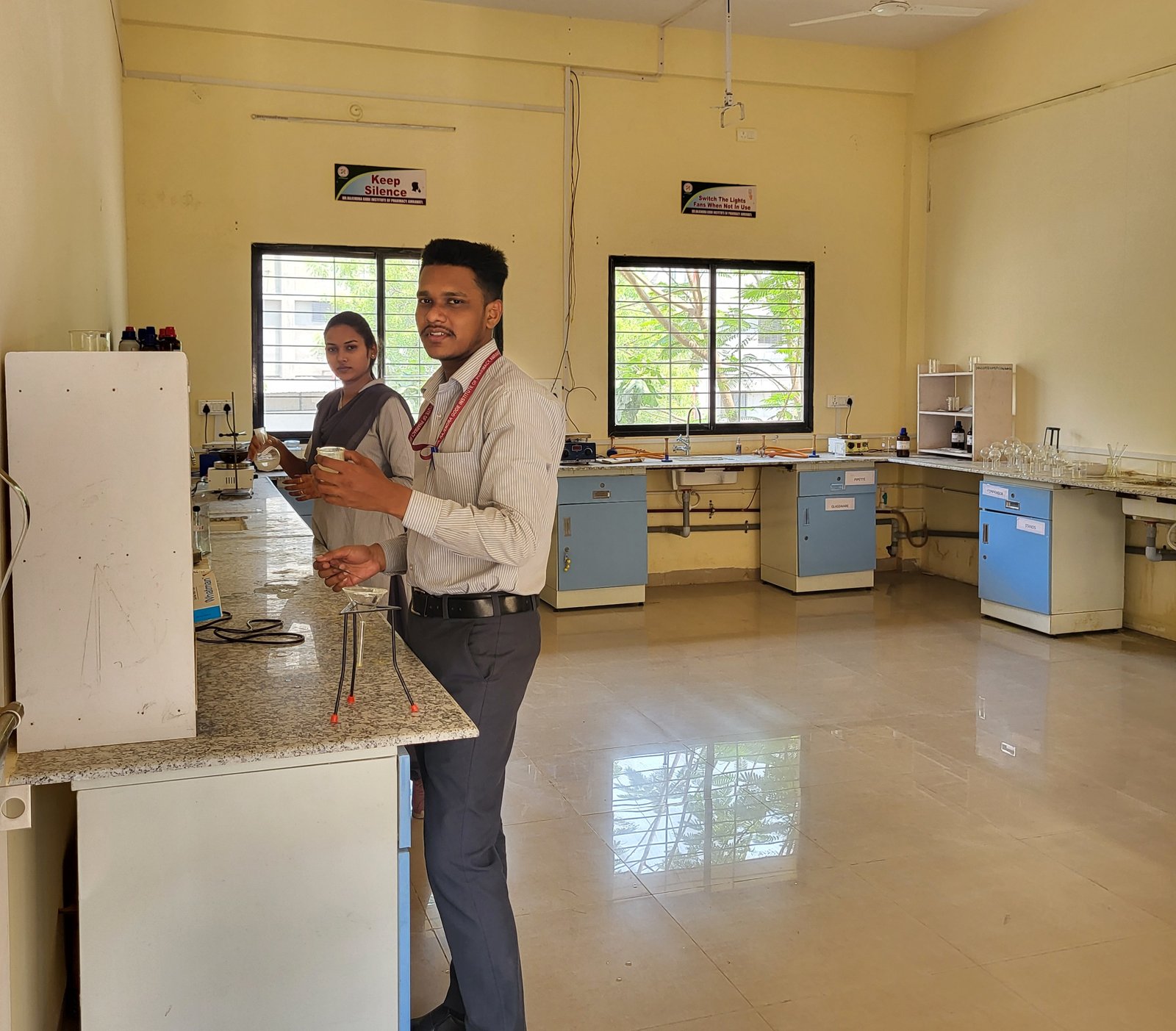
In a pharmaceutical chemistry laboratory, the primary role is to conduct research, analysis, and development of pharmaceutical compounds. These labs focus on the design, synthesis, and testing of chemical substances that can be used as drugs or therapeutic agents. Here are the key roles and responsibilities typically seen in a pharmaceutical chemistry laboratory:
1. Drug Discovery and Development
-
Synthesis of New Compounds: Designing and synthesizing new molecules with potential therapeutic effects.
-
Structure-Activity Relationship (SAR) Studies: Evaluating how changes in chemical structure affect biological activity.
-
Lead Optimization: Refining lead compounds to enhance efficacy, reduce toxicity, and improve pharmacokinetics.
2. Analytical Testing
-
Quality Control (QC): Conducting routine analysis to ensure the quality and purity of raw materials, intermediates, and finished pharmaceutical products.
-
Quality Assurance (QA): Ensuring compliance with regulatory standards like Good Laboratory Practices (GLP) and Good Manufacturing Practices (GMP).
-
Stability Testing: Monitoring the stability of drugs under different environmental conditions.
3. Formulation and Development
-
Preformulation Studies: Evaluating the physicochemical properties of drug candidates.
-
Formulation Development: Developing suitable drug delivery systems (e.g., tablets, capsules, injectables).
-
Compatibility Studies: Testing the compatibility of drugs with excipients.